Truck and Motorcycle Collisions in Ohio: How to Protect Your Claim and Get Full Compensation
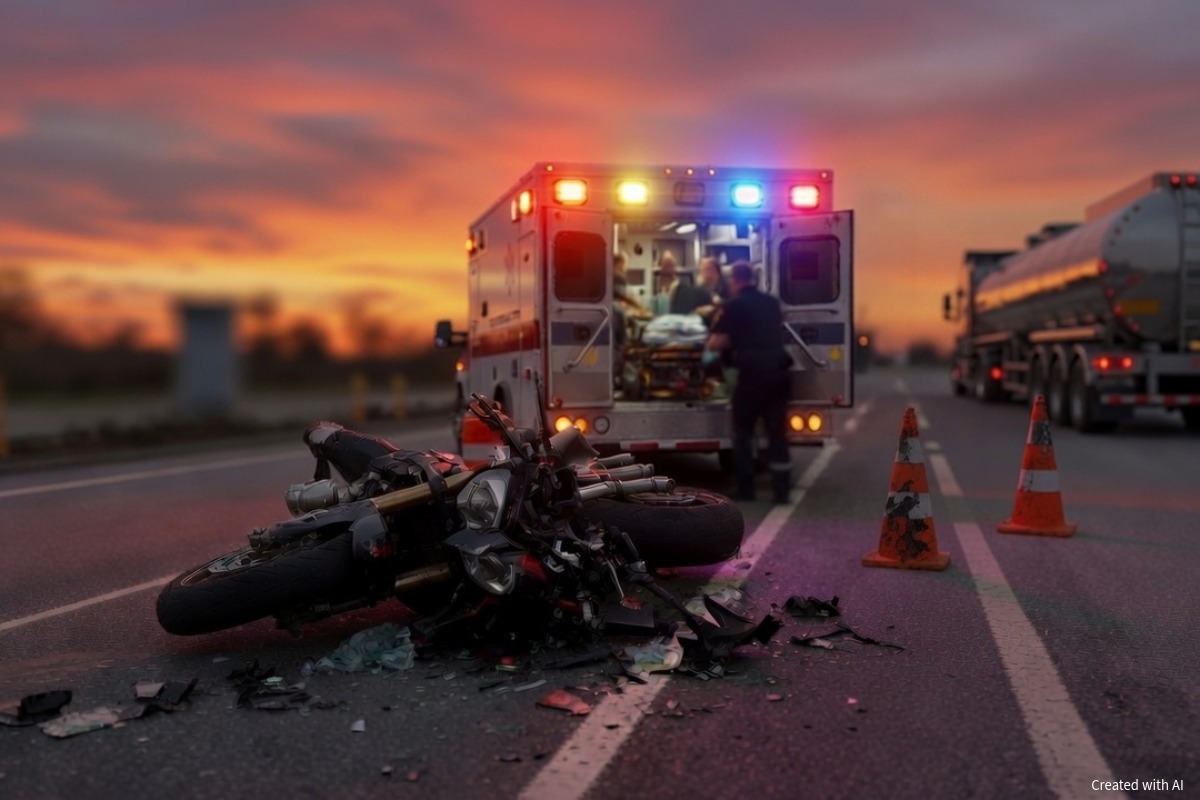
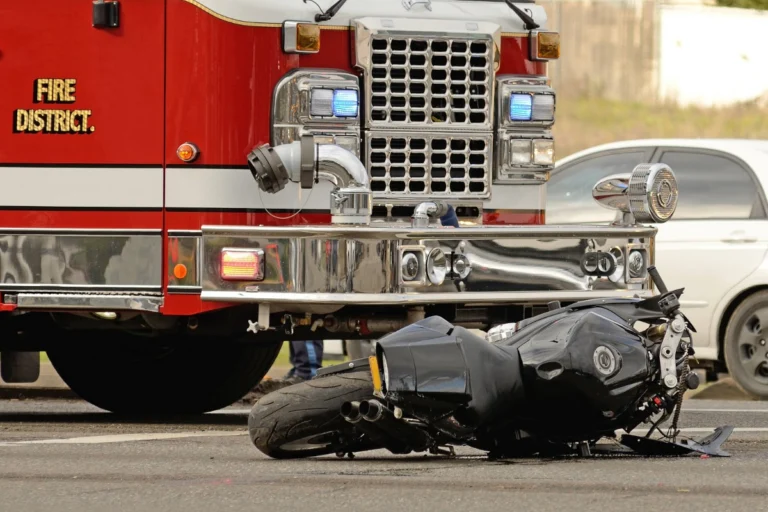
In 2024, the Ohio State Highway Patrol recorded 220 motorcyclist deaths and 150 deaths in crashes involving commercial vehicles. When those categories overlap in a truck and motorcycle collision, you get the worst of both worlds: the speed and mass of an 80,000-pound truck meeting the exposure of a rider with nothing between them and the asphalt.
If you ride in Ohio, you know that part already. What you may not know is how fast the evidence that proves what really happened can vanish — trucking companies start the clock on that loss within hours of the crash. Here are some must-knows about truck and motorcycle collisions in Ohio, as well as how to protect your claim.
Why Truck and Motorcycle Collisions in Ohio Are So Dangerous
Three forces stack against a rider hit by a commercial truck. The first is mass: a loaded tractor-trailer can weigh 80,000 pounds at the federal limit. A motorcycle and rider together rarely exceed 800 (compared to about 4,000 for a passenger car). In a truck and motorcycle collision, the smaller vehicle absorbs almost all the force.
The second is stopping distance. According to the Federal Motor Carrier Safety Administration, a passenger vehicle at 65 mph needs about 316 feet to stop under ideal conditions. A fully loaded tractor-trailer, on the other hand, needs about 525. Add adverse weather, hard-to-navigate construction zones, or worn brakes, and that 525-foot figure stretches further. Those extra 200 feet are the difference between a near-miss and a fatal rear-end strike on I-75.
The last is visibility. Commercial trucks carry blind spots the FMCSA calls No Zones that extend roughly 20 feet in front, 30 feet behind, and across multiple lanes on either side. A motorcycle disappears into those zones during lane changes, merges, and turning maneuvers.
The result shows up in the data. Motorcycles may only account for 3% of registered vehicles and less than 1% of vehicle miles traveled, but they make up 15% of traffic fatalities. The fatality rate per mile ridden runs almost 28 times the rate for passenger car occupants; meanwhile, survivors face traumatic brain injuries, spinal cord damage, and the long recoveries that follow. The damages picture in a serious motorcycle injury claim has to account for all of that.
Truck and Motorcycle Collision Evidence Can Disappear Within Days
Within hours of a serious truck and motorcycle collision, the trucking company’s insurer is on the scene with its own accident reconstruction team. Within days, the data that proves what the truck driver was doing in the minutes before impact can be overwritten, deleted, or lost.
Federal law requires interstate trucking companies to use Electronic Logging Devices (ELDs) that record driving time, on-duty time, and engine activity. The data shows whether the driver exceeded the 11-hour daily driving limit, the 14-hour on-duty limit, or the 60- and 70-hour weekly caps set by federal Hours of Service rules. It captures hard braking events, speed in the seconds before a crash, and whether the driver was logged in at the wheel when the collision occurred. In other words, the black box data often tells the story the driver won’t.
But ELD data only has to be kept for six months under federal regulation. Maintenance and inspection records, driver qualification files, post-accident drug and alcohol test results, and dispatch records each have their own retention windows, some shorter.
That’s why when you hire a truck accident lawyer after a serious truck and motorcycle collision in Ohio, we move quickly to preserve records within the first 48 hours. A spoliation letter, which is a formal legal notice that the trucking company must preserve all crash-related records or face consequences at trial, gets sent to the carrier and its insurer within days of the crash. Without that letter on file, key data can be gone before you leave the hospital.
How Ohio’s Comparative Negligence Rule Cuts Both Ways
Ohio applies a modified comparative negligence rule. A rider found to be 50% or less at fault for the crash can still recover damages, but the award gets reduced by the rider’s fault percentage. A rider found 51% or more at fault recovers nothing. Ohio Revised Code §2315.33 sets that bar, and trucking defense lawyers know how to push you over it.
Their playbook is familiar. They may argue you were speeding, weaving, lane splitting (which is illegal in Ohio), riding without proper licensure, or impaired. They may magnify any inattention on the rider’s side to push your fault share above 50%. With motorcyclists in particular, defense counsel may try to include helmet status in the comparative fault analysis, even though Ohio Revised Code §4511.53 only mandates helmets for riders under 18, for those operating on a temporary permit, and for riders in their first year of motorcycle licensure.
What You Should Do in the First 72 Hours After a Truck and Motorcycle Collision in Ohio
The hours after a serious crash are not the hours for strategic legal decisions, but a few actions taken in the days that follow protect everything that comes after:
- Get to the ER even if you think you walked away clean: Adrenaline masks injuries. Internal bleeding, traumatic brain injury, and spinal damage do not always announce themselves at the scene, and the emergency room record creates the contemporaneous documentation that ties your injuries to the crash. Insurers exploit gaps between the crash date and the first medical visit. Don’t give them one.
- Document what you can: If you or a passenger can take photographs of the scene, the truck, its DOT number and placards, your motorcycle, your injuries, and any visible road or weather conditions, do it. Request the police report and any 911 call recordings as soon as they become available. If witnesses gave statements, get their names from the responding officer.
- Do not give a recorded statement to the trucking company’s insurance adjuster: They will call within 24 to 48 hours of the crash, and they may even sound friendly. But their goal is to lock you into a version of events before you have all the medical and forensic facts. You are not required to give that statement, and you should not.
- Call a lawyer who has handled truck and motorcycle collisions before: Ohio gives you two years to file a lawsuit, but that clock shrinks fast. Before you settle, your doctors need to figure out the full extent of your injuries, your lawyer needs to pin down who was at fault, and you need to compare the insurance company’s offer to what a jury would actually award. The work in the first week, especially the legal notice that forces the trucking company to preserve its records, can be the difference between a full recovery and a partial one.
How Slater & Zurz Builds These Cases
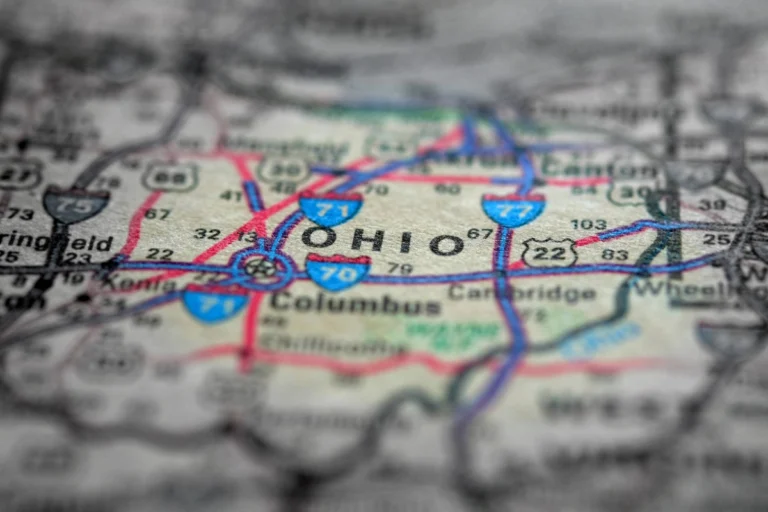
Ohio sits in the middle of the country’s freight network. Major interstates like I-75, I-71, I-70, I-77, and I-270 carry massive volumes of truck traffic to and from cargo hubs in Cincinnati, Columbus, and Toledo every day. If you ride in Ohio, you share lanes with commercial fleets every time you’re on a highway.
Against this landscape, we have handled trucking cases against national carriers, regional fleets, and freight brokers for years. When a motorcyclist is hit by a commercial truck on any Ohio roadway, our team moves fast on scene preservation, evidence demands, medical case workup, and a full damages analysis that accounts for the long arc of catastrophic injury, lost earning capacity, future medical care, and the human costs that don’t fit on a balance sheet.
If you or someone you love was hit by a truck while riding, call us at 330-762-0700 before you talk to the other side’s insurer. The consultation is free, and you pay nothing unless we win.