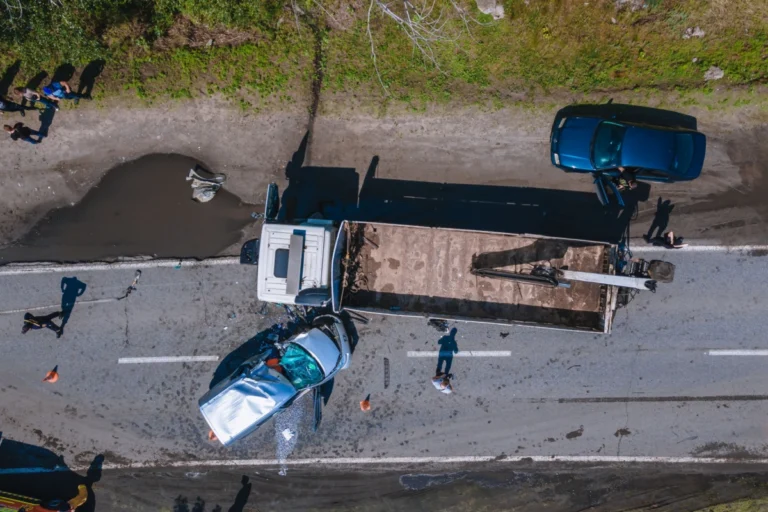
Summer Truck Accidents in Ohio: Why These 100 Days Are Deadliest

The Ohio State Highway Patrol calls the period from Memorial Day through Labor Day the 100 Deadliest Days of Summer — over the past five years, roughly a third of all Ohio fatal crashes have occurred in this 100-day window, even though it represents only 27% of the calendar year.
For drivers sharing Ohio’s interstates with commercial trucks, the increase in accidents is unsurprising. With more traffic, construction, and fatigue, there’s naturally a higher chance that a single bad decision turns into a catastrophic crash.
Our team at Slater & Zurz has handled truck accident cases across Ohio for decades. What we see every summer is the same pattern: families who took a routine trip down I-71 or I-75 and ended up in a hospital, a funeral home, or our office because a semi did not stop in time. Here’s what you need to know about protecting yourself if you get into a summer truck accident in Ohio.
Why Do Truck Crashes Spike on Ohio Highways in Summer?
The Federal Motor Carrier Safety Administration identifies six specific factors that drive the summer surge in large-truck and bus collisions: increased roadway volume, heavier congestion, more inexperienced drivers on the road, peak construction and work-zone season, distracted driving, and speeding.
Ohio see all six factors. In 2023, OSHP recorded 5,374 semi-truck crashes statewide, with 145 fatalities and 2,258 non-fatal injuries. During the summer, that baseline number rises significantly given extra vacation traffic, RV traffic, motorcycle riders, teen drivers on summer break, and a construction season that turns long stretches of interstate into narrowed, shifting work zones.
According to the FMCSA, large trucks account for roughly 33% of fatal work zone crashes nationwide, despite making up only about 5% of vehicles on the road. Work zones present challenges for truck drivers that don’t exist in normal traffic, including narrowed lanes, sudden stops, lane shifts, and uneven road surfaces. A loaded semi traveling 65 mph needs roughly 525 feet to stop, but when traffic ahead brakes hard in a construction zone, that stopping distance no longer exists.
Driver fatigue is the other major summer multiplier. The FMCSA’s Large Truck Crash Causation Study found that fatigue was a factor in 13% of commercial motor vehicle crashes. Long-haul drivers running through Ohio in July often log routes that start before sunrise and end after dark. Heat, longer daylight hours, and the pressure to hit delivery windows ahead of holiday deadlines all push drivers past safe limits.
Where Are the Most Dangerous Summer Truck Crash Locations in Ohio?
The state’s highest-volume freight corridors carry the highest risk of summer crashes. I-71 between Cleveland and Columbus, I-75 through the Dayton-Cincinnati corridor, I-70 across the state, and the Ohio Turnpike all see heavy commercial traffic year-round and substantially more passenger vehicle traffic in summer. The Cleveland metro area, within Cuyahoga County, reports some of the highest truck crash density in the state.
Work zones on these corridors deserve special attention. Ohio conducts major reconstruction and repaving projects throughout the summer because the weather allows. Meanwhile, construction zones in Ohio create exactly the conditions that turn near-misses into catastrophic crashes: stopped traffic where a fatigued trucker isn’t expecting it, lanes that narrow without warning, and orange barrels that obscure sight lines.
What Should Ohio Drivers Do to Stay Safe Around Trucks This Summer?
Defensive driving around commercial vehicles is essential for preventing summer truck accidents in Ohio. A few habits matter more than others:
- Stay out of a truck’s no-zones. The blind spots directly behind, directly in front, and along the right side of a tractor-trailer are large enough to hide a passenger car. If you cannot see the driver’s mirrors, the driver cannot see you.
- Pass on the left and pass decisively. Lingering alongside a semi at 70 mph gives the truck driver nowhere to go if a tire blows or cargo shifts.
- Give extra space in work zones. Triple the following distance you would normally keep. If traffic stops ahead, a truck behind you may not.
- Plan around peak times. Friday afternoon and Sunday evening on I-71 and I-75 are the worst of the worst, so adjust travel windows when you can. And do not drive impaired on holiday weekends — Memorial Day, the Fourth of July, and Labor Day are the three highest-risk windows in Ohio.
None of this advice prevents every crash; some crashes happen because a trucker fell asleep, ran a red light, or drove a rig with brakes the carrier knew were failing. When that happens, it’s important to know that the legal system is here to protect your family.
What Should You Do If You Are Hurt in an Ohio Summer Truck Crash?
In the first 72 hours after a truck crash, the trucking company’s adjusters and defense lawyers are already mobilizing while the family is still in the emergency room. What you do during that window matters.
The most important step you can take is getting medical care and documenting everything. Injuries from truck crashes often present slowly; spinal injuries, brain injuries, and other long-term truck crash injuries can take days to fully manifest. The medical record matters for your recovery and for any claim.
Next, do not give a recorded statement to the trucking company’s insurer. Those calls are structured to elicit answers that limit the insurer’s exposure. Decline politely until you have talked to a truck accident attorney.
A truck accident attorney can also help you preserve every scrap of evidence. The truck’s Electronic Logging Device records (Hours of Service compliance), dashcam footage, post-crash drug and alcohol test results, dispatch records, and the carrier’s maintenance and inspection files can all be lost or overwritten within weeks. We can send a preservation letter that forces the company to keep them.
At Slater & Zurz, our trucking practice has spent decades fighting insurers on behalf of injured Ohioans and their families. We know how the federal regulatory overlay creates accountability, and we know how quickly carriers move to limit their exposure after a crash. Acting fast protects the case.
If you or a family member was hurt in a truck crash this summer in Ohio, call 330-762-0700 for a free consultation. There is also no fee unless we recover compensation on your behalf.