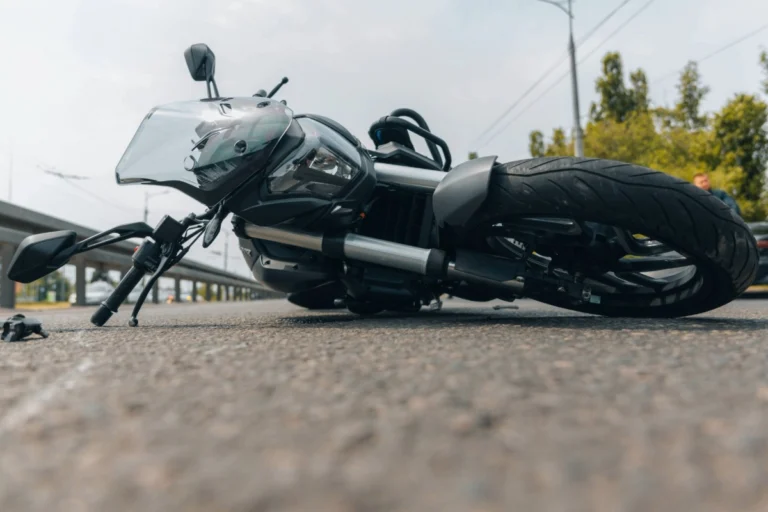
Left-Turn Motorcycle Accidents in Ohio: Why They’re So Deadly and What Riders Can Do

On March 20, 2026, Nichole VanMeter was riding her Harley-Davidson Sportster northwest on South Wooster Avenue in Strasburg. At 9:15 p.m., a Toyota RAV4 pulled out of a private driveway and turned left across her path. The motorcycle overturned, and VanMeter, a mother of three, died at the hospital.
Her crash fits a pattern that is unfortunately common on Ohio roads. According to NHTSA, 44% of fatal two-vehicle motorcycle crashes nationally involve a car turning left in front of a rider traveling straight. Ohio, in particular, logged over 1,000 motorcycle deaths between 2020 and 2024, with the Ohio State Highway Patrol consistently listing failure to yield among the top contributing factors in multi-vehicle collisions.
If you ride in Ohio, read on as we explore why these collisions happen, what Ohio law says about fault, and what steps you can take to protect your right to compensation.
Why Are Left-Turn Crashes So Deadly for Ohio Motorcyclists?
Left-turn crashes are dangerous due to physics and visibility. A passenger car turning left has several seconds to scan oncoming traffic, judge distances, and commit to the turn. As a result, riders only have a fraction of that time to react — at 40 mph, a motorcycle needs roughly 120 feet to stop, which means a driver pulling left from a driveway 80 feet away leaves no margin.
Visibility makes the timing problem worse. Because motorcycles are narrow, a driver scanning two or three lanes for a gap only sees a slim profile, and the brain fills in the rest. In multiple-vehicle motorcycle crashes, 64% were attributed to an error by the other vehicle’s driver, not the rider. Perception failures were the most common error type: drivers reported failing to detect the motorcycle or recognize a dangerous condition.
Once the crash happens, the rider has no airbags or crumple zones around them. A standard motorcycle weighs roughly 500 pounds while a vehicle like the Toyota RAV4 involved in the Strasburg crash weighs around 4,000. This force differential explains why left-turn motorcycle crashes in Ohio so often produce catastrophic motorcycle injuries, including brain trauma, spinal cord damage, amputations, and compound fractures.
Does Ohio Law Put the Fault on the Turning Driver?
Ohio Revised Code § 4511.42 states that a driver turning left at an intersection, alley, private road, or driveway must yield to any oncoming vehicle that constitutes an immediate hazard. In other words, a motorcycle traveling through on the main road has the right of way.
While the legal framework is clear that a driver who turns into an oncoming rider’s path carries the liability for what follows, insurance companies have tactics to push back on this. For example, adjusters may argue the rider was speeding, riding without adequate lighting, or approaching at a bad angle.
In Ohio, you can still recover damages if you bear partial fault, but your compensation is reduced by your percentage of responsibility. If adjusters can assign some fault onto the motorcyclist under Ohio’s comparative negligence rules, they reduce what the insurance company needs to pay out. That’s why early, thorough evidence collection makes such a big difference between a full recovery and a reduced one.
What Makes a Private Driveway or Intersection So Dangerous for Riders?
Intersections and driveway exits share a common problem: a driver’s sightlines are often blocked until the last moment. Parked cars, shrubs, building corners, and roadside signs can obstruct a clear view of oncoming traffic. A driver edging out from behind a parked delivery truck may not spot your headlight until they are already committed to the turn.
Private driveways carry a secondary hazard: drivers exiting them tend to expect slower, lower-volume traffic. A driver pulling onto a busy state route scans for gaps and commits. Motorcycles at highway speed close distance faster than most drivers expect, especially at night.
How Does Helmet Use Affect a Left-Turn Motorcycle Accident Claim in Ohio?
Ohio does not require helmets for riders 18 and older. While helmet use, or the absence of it, speaks to injury severity, not to who caused the collision, insurers may still raise helmet non-use as a comparative negligence argument.
Their position is that a helmet might have reduced head injuries and that the rider’s choice contributed to the damages. Ohio courts have handled this inconsistently, but a skilled motorcycle accident attorney can counter it by focusing on what the turning driver did. Did they stop completely, check both directions, confirm a clear sightline? Those questions determine fault for the crash.
OSHP data from 2018 to 2022 shows that 72% of Ohio motorcyclists killed were not wearing helmets at the time of the crash. That figure reflects a choice many riders make, but it does not bar them from pursuing compensation.
What Should You Do After a Left-Turn Motorcycle Accident in Ohio?
If you experience a left-turn motorcycle accident in Ohio, call 911 immediately. You need an OSHP or local police report documenting the other driver’s position, their direction of travel, and any citations issued. In left-turn crashes, the report often records a failure-to-yield violation, and that citation becomes a central piece of your case.
Next, preserve every piece of evidence you can reach. If you ride with a dash camera, or your phone captured anything at the scene, do not delete it. If witnesses stopped, get their contact information before you leave. Surveillance cameras are common on commercial driveways and traffic intersections, but the footage typically overwrites within 24 to 72 hours. A motorcycle accident attorney can send a preservation letter the same day to secure that recording before it disappears.
Make sure to see a doctor even if you feel functional. Adrenaline masks pain, and spinal injuries, internal bleeding, and traumatic brain injury can appear hours or days after the impact. A documented medical timeline ties your injuries to the accident and prevents the insurer from arguing later that your symptoms came from something unrelated.
Finally, do not give the other driver’s insurer a recorded statement before speaking with a lawyer. Adjusters ask questions designed to establish that you were speeding, inattentive, or out of position on the road. You are not required to provide a statement, and anything you say enters the claim record.
How Much Is a Left-Turn Motorcycle Accident Claim Worth in Ohio?
Left-turn motorcycle crashes produce some of the most serious injuries on Ohio roads, and serious injuries mean substantial damages. A claim can include emergency and ongoing medical costs, lost wages and reduced earning capacity, physical therapy and rehabilitation, adaptive equipment, pain and suffering, and, in wrongful death cases, funeral expenses and loss of consortium.
That said, the value of any specific claim depends on the severity of the injuries, strength of the liability case, and how thoroughly your attorney documents what you have lost. Ohio places no cap on compensatory damages in motorcycle accident claims, so your recovery reflects the actual harm you suffered.
Talk to a Slater & Zurz Motorcycle Accident Attorney Today
A left-turn crash changes a life in seconds. At Slater & Zurz, we have represented injured riders and their families across Ohio for decades, and we understand how fast evidence in these cases disappears. The sooner you contact our team, the more we can preserve and the stronger your case becomes.
You deserve a clear answer about your options and a legal team prepared to fight for what you have lost. Contact Slater & Zurz today for a free consultation at 330-762-0700. You pay nothing unless we recover compensation for you.